

Most tooth sensitivity involves cold. A sharp twinge from an icy drink or cold air is common and, in many cases, manageable. But when a tooth responds specifically to heat, and that pain lingers after the hot drink or food is gone, the situation is different.
Heat-specific tooth pain that does not settle quickly is a symptom worth taking seriously. It often signals a deeper problem inside the tooth itself, and understanding what that means can help you decide how quickly to act. This is the kind of pain that emergency toothache treatment is designed to address.
Quick Overview
- Tooth pain triggered specifically by heat, and that lingers after the source is removed, is a distinct symptom pattern from general tooth sensitivity
- It may indicate that the pulp (the nerve-containing tissue inside the tooth) is inflamed or under stress
- The underlying cause, and how far the condition has progressed, significantly affects what treatment is needed
- A dental assessment is needed to diagnose the cause accurately and determine the right next step
Keep reading to understand what causes heat-specific tooth pain, why it is different from other sensitivity, and when it needs prompt attention.
Why Heat Sensitivity Is Different From Cold Sensitivity
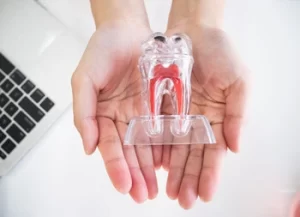 Teeth can become sensitive for many reasons: enamel erosion, gum recession, cracked teeth, and tooth decay are among the most common. Most of these conditions cause sensitivity to cold far more often than to heat.
When a tooth responds to cold but not heat, or the cold sensitivity passes quickly, this often suggests the nerve inside the tooth is still functioning relatively normally. When heat is the main trigger, and especially when the pain does not settle quickly after hot food or a warm liquid, it suggests the nerve tissue inside the tooth is under more significant stress.
What Causes Heat-Specific Tooth Pain?
The most likely cause is pulp inflammation, which is inflammation of the soft tissue at the centre of the tooth that contains nerves and blood vessels. When this inflammation is mild and early, it may cause cold sensitivity that passes quickly. When it progresses, the pulp becomes increasingly irritated, and heat becomes a more reliable trigger.
In more advanced cases, the pain does not resolve when the heat source is removed. It may linger for minutes. This pattern is a warning sign that the pulp may be beyond the stage where it can recover on its own.
Other conditions that can contribute to heat sensitivity include cracked teeth and tooth decay, both of which can allow heat to affect the pulp more directly. A cracked tooth, in particular, can trap fluid that expands with heat and causes sharp, intense pain.
What to Do If Your Tooth Hurts With Heat Only
Do not wait to see if the pain settles on its own. Heat-specific tooth pain that lingers is a signal that the pulp is in distress, and the longer the condition is left untreated, the fewer options are typically available.
A dentist will assess the tooth using a clinical examination, temperature testing, and X-rays to identify the cause and determine the appropriate treatment. Depending on the diagnosis, treatment may range from addressing decay or a crack to root canal treatment if the pulp is significantly damaged.
A Considered Approach to Tooth Pain
Tooth pain with heat only is your tooth communicating that something is wrong inside. Prompt assessment is the right response.
If you are experiencing heat-specific tooth pain, we welcome you to contact Finesse Dental Stanhope Gardens. Call us on (02) 8806 0790 or book a dental appointment at a time that suits you.
Note: Any surgical or invasive procedure carries risks. Before proceeding, you should seek a second opinion from an appropriately qualified health practitioner.
Frequently Asked Questions
Why does my tooth only hurt with heat and not cold?
Heat-specific pain that lingers after the source is removed is often a sign that the pulp tissue inside the tooth is significantly inflamed. Cold sensitivity that passes quickly is more typical of early-stage pulp irritation. When heat becomes the main trigger, and the pain does not settle, it suggests the pulp may be in a more advanced state of inflammation. A dental assessment is needed to confirm the cause.
Can tooth pain with heat only go away on its own?
It is unlikely. Lingering heat sensitivity typically indicates a level of pulp inflammation that does not resolve without treatment. Leaving it untreated may allow the condition to worsen, which can reduce the treatment options available. Desensitising toothpaste is not an appropriate response to this symptom pattern. Prompt dental assessment is recommended.
Is heat sensitivity in a tooth a dental emergency?
If the pain is severe, lingers for more than a few minutes after the heat source is removed, or is accompanied by swelling, it should be treated as urgent. Even if the pain is intermittent, it warrants a timely appointment rather than a wait-and-see approach. The earlier the condition is assessed, the more treatment options are typically available. Individual circumstances vary.
References
Healthdirect Australia. (2026). ‘Toothache and gum swelling’. Healthdirect Australia, 30 June. Sydney, NSW: Healthdirect Australia. https://www.healthdirect.gov.au/toothache-and-gum-swelling
Australian Dental Association. (n.d.). ‘Toothache’. teeth.org.au. Sydney, NSW: Australian Dental Association. https://www.teeth.org.au/toothache