
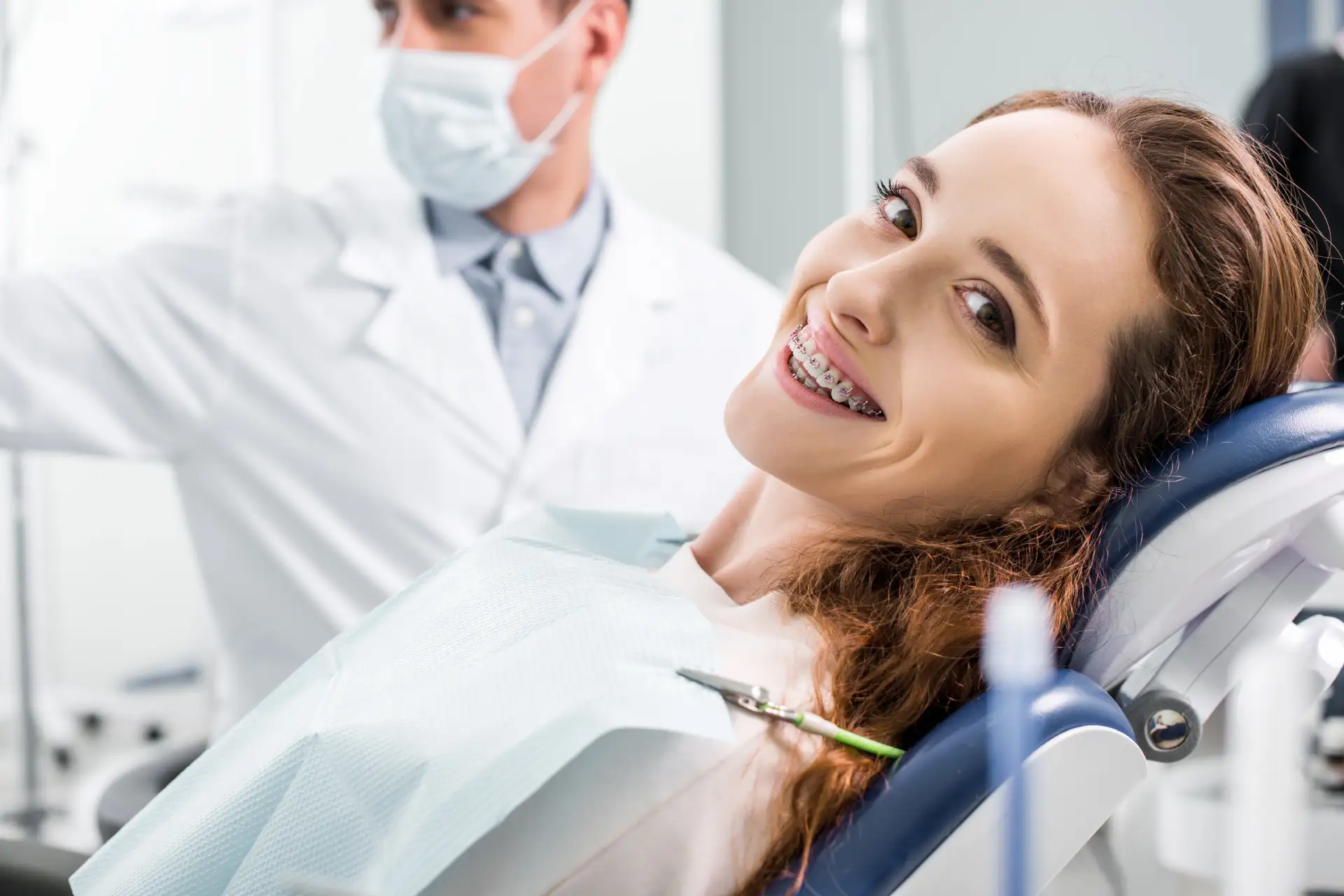
Crowded teeth are one of the most common reasons people look into orthodontic treatment. When there is not enough space in the jaw for teeth to sit in proper alignment, they can overlap, twist, or shift out of position. This affects more than appearance. Crowded teeth are harder to clean, which can raise the risk of tooth decay and gum disease over time.
Understanding what causes crowding, how treatment works, and which option may suit your situation can help you make a more informed decision about your oral health. Braces for crowded teeth remain one of the most widely used approaches, and options range from traditional metal braces to clear aligners and modern orthodontic systems, depending on the degree of crowding and individual dental factors.
Quick Overview
- Braces for crowded teeth work by applying controlled pressure to shift teeth into better alignment over time
- They may suit mild, moderate, or severe cases; treatment type depends on the degree of crowding and individual dental factors
- Treatment typically involves fixed brackets or removable trays worn over an extended period, with regular check-ups to monitor progress
- How long treatment takes and how well teeth respond varies between individuals
- A clinical assessment, including X-rays and a review of your bite, is needed to confirm which approach is appropriate
Keep reading to understand what causes crowded teeth, how braces address them, and what to expect from the process.
What Causes Crowded Teeth?
Dental crowding happens when the available space in the jaw is not sufficient for all the teeth to erupt or align properly. This is a type of malocclusion, meaning a misalignment of the bite.
Several factors contribute to crowding. Genetics is one of the most common. Jaw size and tooth size are both inherited traits, and a mismatch between the two, for example inheriting a smaller jaw from one parent and larger teeth from the other, can leave insufficient room for teeth to align. Premature loss of baby teeth is another factor, as it can allow neighbouring teeth to drift into the space before permanent teeth have a chance to come through properly.
Orthodontic treatment addresses crowded, crooked and misaligned teeth, as well as incorrect biting patterns and severe jaw misalignment.
Other contributing factors include prolonged thumb sucking in early childhood, mouth breathing habits that affect jaw development, and in some cases, the natural narrowing of the jaw over time as adult teeth emerge.
Why Crowded Teeth Are an Oral Health Concern
Crowding is not only a cosmetic issue. When teeth overlap or are pushed out of alignment, they are significantly harder to clean. Brushing cannot always reach between tightly packed teeth, and flossing becomes difficult in areas where teeth press closely together.
This creates conditions where plaque and bacteria accumulate in spaces that routine oral hygiene cannot reliably reach. Over time, this can lead to a higher risk of tooth decay in hard-to-access contact points, and gum inflammation that can develop into gum disease if left unaddressed.
Crowded teeth can also cause uneven bite pressure. When teeth do not come together properly, some teeth absorb more force during chewing than others. This uneven wear can weaken enamel and, in more severe cases, contribute to jaw discomfort.
What Types of Braces Are Used for Crowded Teeth?
The main options for treating crowded teeth with braces include:
Traditional metal braces apply consistent pressure through metal brackets bonded to the teeth and connected by an archwire. They are adjusted at regular appointments to guide tooth movement. Metal braces are suitable for a wide range of crowding, including moderate and severe cases, and are a reliable option when more complex tooth movements are needed.
 Ceramic braces work the same way as metal braces but use tooth-coloured or clear ceramic brackets. They are less visible than metal braces while still providing fixed, continuous correction. They suit patients who want a less prominent appearance from a fixed appliance.
Lingual braces are fixed to the inside surface of the teeth rather than the front. This makes them practically invisible from the outside. They are suited to certain cases and require assessment to determine suitability.
Clear aligners such as Invisalign use a series of custom-made, removable trays to gradually shift teeth. They are typically suited to mild to moderate crowding and are removed for eating and cleaning.
How Severely Crowded Are Your Teeth?
The degree of crowding influences which treatment may be recommended. Dental crowding is generally categorised as mild, moderate, or severe.
Mild crowding involves minor overlapping or rotation of one or a few teeth. Clear aligners or less involved brace systems can often address mild cases.
Moderate crowding involves more significant overlapping across multiple teeth. Traditional or ceramic braces are commonly used, and the treatment plan will depend on the space available in the jaw.
Severe crowding may involve teeth that are significantly rotated, displaced, or where there is a considerable mismatch between jaw size and the number and size of teeth. In some severe cases, a dentist may recommend removing one or more teeth to create adequate space before or during orthodontic treatment.
Whether braces or clear aligners are appropriate depends on how much correction is needed, and a dentist can advise on the most suitable option after assessment.
What to Expect During Braces Treatment
Once a treatment plan is in place, the process follows a predictable path regardless of the brace type.
Assessment and planning: Your dentist takes X-rays and examinations to map out how your teeth, roots, and jaw sit together. This informs the treatment approach and estimated duration.
 Fitting: For fixed braces, brackets are bonded to the teeth, and the archwire is threaded through. For clear aligners, custom trays are made from digital impressions.
Adjustment appointments: Fixed braces require regular visits, typically every four to eight weeks, for wire adjustments. Aligner wearers progress through a series of trays and attend check-ups to confirm teeth are tracking as planned.
Oral hygiene during treatment: Keeping teeth clean becomes more important during treatment, not less. Food can lodge around brackets with fixed braces, and tight spaces between teeth require more careful attention than usual. Brackets and wires trap more plaque and food particles, making thorough cleaning harder. Your dentist can advise on the best tools and technique for your specific setup.
Retention: Once active treatment is complete, retainers are worn to maintain the new tooth positions. Without retention, teeth can shift back over time.
Treatment duration varies depending on the degree of crowding and how an individual’s teeth respond.
A Considered Approach to Crowded Teeth
Crowded teeth are a clinical concern that can affect oral hygiene and long-term dental health, not just appearance. The right treatment depends on the degree of crowding, the health of your teeth and gums, and what a dentist recommends after examining your case.
If you would like to find out whether braces or another orthodontic option may be suitable for your crowded teeth, we welcome you to get in touch with Finesse Dental Stanhope Gardens. Call us on (02) 8806 0790 or book a consultation online.
Frequently Asked Questions
Do braces hurt when treating crowded teeth?
Some discomfort is common, particularly in the first few days after braces are fitted and after each adjustment appointment. This is typically described as pressure or tenderness rather than sharp pain, and it tends to settle within a few days. Over-the-counter pain relief is commonly used to manage this. The level of discomfort varies between individuals and generally reduces as treatment progresses.
How long do braces take for crowded teeth?
Treatment duration depends on the degree of crowding and how teeth respond to the applied pressure. Mild crowding may be addressed in several months, while moderate to severe crowding often takes between one and two years. Your dentist will provide a more accurate estimate after assessing your specific case, as individual factors affect how quickly teeth move.
Note: Any surgical or invasive procedure carries risks. Before proceeding, you should seek a second opinion from an appropriately qualified health practitioner.
References
Australian Dental Association. (n.d.). ‘Teeth Straightening and Braces’. teeth.org.au. Sydney, NSW: Australian Dental Association. https://www.teeth.org.au/teeth-straightening-and-braces
Healthdirect Australia. (2025). ‘Dental braces and retainers’. Healthdirect Australia, 7 October. Sydney, NSW: Healthdirect Australia. https://www.healthdirect.gov.au/dental-braces-and-retainers
Department of Health, State Government of Victoria. (2025). ‘Orthodontic treatment’. Better Health Channel, 15 December. Melbourne, VIC: Department of Health, Victoria. https://www.betterhealth.vic.gov.au/health/conditionsandtreatments/orthodontic-treatment