

Many people expect a little tingling after teeth whitening, but unbearable pain after teeth whitening can be worrying, especially when it keeps you up at night or makes eating hard. Tooth sensitivity is a known side effect of whitening treatments. The type of pain, how long it lasts and where you feel it can say a lot about what is going on.
At Finesse Dental, we check your teeth and gums before any whitening procedure and explain what to expect, including how to manage sensitivity if it happens.
Quick Overview
- Tooth sensitivity is a common side effect of whitening and often settles within a few days, though how strong it feels can differ a lot from person to person.
- Short, sharp twinges with cold drinks or cold air are often part of the usual response, while pain that lingers, throbs or sits in one tooth may point to something else.
- The strength of the whitening gel, how long it stays on your teeth, and the condition of your enamel and gums can all shape how much your teeth hurt.
- Simple steps at home may help relieve sensitivity, but unbearable pain after teeth whitening, or pain that keeps getting worse, is usually a sign your teeth need a closer look.
Below, we explain why whitening can hurt, what may make it worse, and the signs that suggest it is time to see a dentist.
Is Unbearable Pain After Teeth Whitening Normal?
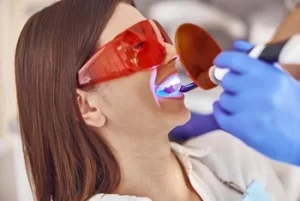 Mild to moderate sensitivity after whitening is common and usually temporary. Pain that feels unbearable is less typical. It can still happen, particularly after stronger in-chair treatments, but pain that is severe, lasts more than a day or two, or centres on one tooth should be checked by a dental professional.
Most people describe whitening sensitivity as quick, sharp jolts of pain, often triggered by hot and cold drinks. Others notice a dull ache across several teeth for a few hours.
Teeth may feel sensitive to cold straight after whitening, and the gums may feel irritated. If this continues for more than one or two days, the advice is to see your dental professional for a check.
Pain that feels truly unbearable deserves attention, because whitening is not always the only cause. Untreated decay, a cracked tooth or an exposed root can make the whitening process far more uncomfortable.
Why Do Teeth Hurt After Whitening?
Whitening agents work by releasing oxygen that breaks down stain molecules inside the tooth. The two main bleaching agents are hydrogen peroxide and carbamide peroxide. Carbamide peroxide breaks down into hydrogen peroxide once it is on the teeth.
These molecules are small enough to pass through tooth enamel into the dentine underneath. Dentine contains tiny channels that lead to the pulp, the soft centre of the tooth where the nerve sits. When peroxide reaches the pulp, it can irritate the nerve for a short time. This is thought to be the main reason teeth feel sensitive during and after teeth bleaching.
Whitening gels can also cause gum irritation if they touch the soft tissue around your teeth. This may feel like burning or stinging. It can leave pale patches on the gums, which often fade within a day or so.
What Affects Whitening Sensitivity?
Several factors can make teeth feel sensitive after whitening, or make the pain stronger:
- Gel strength and contact time. Higher concentrations and longer application times are associated with more sensitivity. In Australia, products containing more than 6% hydrogen peroxide can only be used by registered dental professionals.
- Teeth that are already sensitive. If you have experienced sensitive teeth before, they may react more strongly.
- Thin enamel or gum recession. Receding gums expose the root surface, which has no enamel covering. Thin enamel also gives peroxide a shorter path to the nerve.
- Cracks, decay or worn fillings. These create gaps where gel can reach the inner tooth more quickly. Sensitivity is usually temporary and minor, but it can be more severe if you have untreated tooth decay.
- Ill-fitting trays and over-the-counter products. Generic trays and whitening strips may not fit closely, so gel can spread onto the gums. Using teeth whitening products more often or longer than directed can also add to the discomfort.
- Acidic foods and drinks. Citrus fruit, soft drinks and wine can briefly soften the tooth surface, which may make sensitivity worse.
How to Relieve Sensitivity After Whitening
If your teeth hurt after whitening, these steps may help ease mild to moderate discomfort:
- Pause take-home whitening. Stop using trays or strips until the pain settles, then ask your dentist about adjusting the gel strength or wear time.
- Use a desensitising toothpaste. A sensitive toothpaste containing potassium nitrate may calm the nerve response over time. Stannous fluoride toothpastes may help by blocking the tiny channels in dentine.
- Keep up fluoride. Brushing twice a day with fluoride toothpaste supports your tooth enamel. Your dentist may also apply fluoride gels or desensitising gels in the dental office.
- Brush gently. Use a soft-bristled toothbrush and a gentle toothpaste. Avoid scrubbing near the gum line.
- Choose room temperature beverages. Avoid very hot or cold foods and cold drinks for a few days. Breathing cold air through your mouth can also trigger sharp pain.
- Limit acidic, sugary and sweet foods. These can add to sensitivity while your teeth recover.
- Ask about pain relief. A pharmacist can advise which over-the-counter pain relief may suit you. Always follow the directions on the label.
When Should You Seek Professional Help for Whitening Pain?
Whitening sensitivity usually affects several teeth and slowly improves. It is a good idea to seek professional advice if you notice: 
- pain that lasts longer than one or two days, or keeps getting worse
- throbbing pain, or pain that wakes you at night
- pain focused on one tooth, or pain when you bite down
- pain that lingers for a long time after hot or cold foods
- swelling, a bad taste or fever
- blisters, burns or lasting white patches on the gums
A dental check-up and clean before whitening can also help prevent tooth sensitivity, by finding and treating problems before any gel goes on your teeth.
A Considered Approach to Teeth Whitening Comfort
Sensitivity after whitening is common, but it should not leave you in severe pain for days. A dental check can show whether the pain comes from the whitening or another problem, and your plan can be adjusted to suit your teeth. Individual outcomes vary, and the right approach depends on your individual situation.
If your teeth are still sore after whitening, or you would like to find out whether whitening may suit you, we welcome you to call Finesse Dental on (02) 8806 0790. Our team can arrange a time to check your teeth and talk through your options.
Frequently Asked Questions
How long does sensitivity last after teeth whitening?
For most people, sensitivity lasts a few days and is often strongest in the first 24 hours. If pain continues beyond one or two days, or gets worse, have your teeth checked.
Why do my teeth hurt so much after whitening?
Whitening gels contain peroxide, which can pass through enamel and briefly irritate the nerve inside the tooth. Pain may be stronger with high-strength gels, longer contact times, thin enamel, receding gums or existing cracks and decay.
What helps unbearable pain after teeth whitening?
Stop any take-home whitening, use a desensitising toothpaste, and choose room temperature food and drinks. A pharmacist can advise on suitable pain relief. Pain that feels unbearable, or that does not ease within a day or two, should be assessed by a dentist.
Is it normal for gums to hurt after teeth whitening?
Mild gum irritation can happen if whitening gel touches the gums, and it often fades quickly. Blisters, burns, or gum pain lasting more than a day or two should be checked.
Should I keep whitening if my teeth are sensitive?
It is usually best to pause and let your teeth settle first. Your dentist may suggest a lower-strength gel, shorter wear times or a desensitising product before you continue.
References
- Healthdirect Australia. Teeth whitening. https://www.healthdirect.gov.au/teeth-whitening
- Australian Dental Association (teeth.org.au). 4 reasons to see a dentist for teeth whitening. https://teeth.org.au/4-reasons-to-see-a-dentist-for-teeth-whitening
- Operative Dentistry (2025). At-home vs in-office bleaching: an updated systematic review and meta-analysis. https://operative-dentistry.kglmeridian.com/view/journals/odnt/aop/article-10.2341-24-078-LIT/article-10.2341-24-078-LIT.xml