

Teeth whitening is one of the most requested cosmetic dental treatments in Australia. With so many options available, from in-chair treatments to take-home kits and over-the-counter strips, it is understandable that questions about safety come up. One of the most common concerns is whether whitening products cause lasting damage to tooth enamel.
The short answer is that the risk of damage depends largely on what product is used, how it is used, and whether your teeth are suitable for whitening in the first place. Understanding the difference between temporary side effects and genuine harm can help you make a more informed decision before considering professional teeth whitening treatment.
Quick Overview
- Teeth whitening uses hydrogen peroxide or carbamide peroxide to lighten the colour of the enamel; it does not strip the tooth surface
- It may suit adults with surface staining or general discolouration; it is not appropriate for everyone, including those with untreated gum disease or cracked teeth
- Professional treatments involve higher-concentration gels applied under dental supervision, with custom trays or in-chair application
- Temporary sensitivity is a common side effect; whether it occurs and how long it lasts varies between individuals
- A dental assessment is needed before treatment to confirm suitability and identify any pre-existing oral health concerns
Keep reading to understand how teeth whitening works, what side effects are possible, and what distinguishes professional treatment from over-the-counter options.
How Does Teeth Whitening Work?
Teeth whitening involves applying a bleaching agent to the outer surface of the teeth. The active ingredients in most products are hydrogen peroxide or carbamide peroxide. These chemicals penetrate enamel to dissolve stains in the dentine layer beneath, lightening the overall appearance of the tooth.
The process does not remove enamel. It works through a chemical oxidation reaction, not physical abrasion. Enamel is the hard outer layer of the tooth and serves as its primary protective barrier. The concern that whitening erodes or strips enamel is a common misconception, though it is not entirely without basis. The distinction lies in how products are used and at what concentration.
Does Teeth Whitening Damage Tooth Enamel?
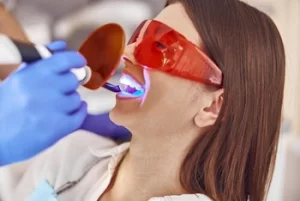 When used correctly, teeth whitening does not cause permanent structural damage to enamel. Professional treatments supervised by a dentist use controlled concentrations of bleaching agents, applied for appropriate durations, in ways designed to minimise the risk to surrounding tissues.
Where damage can occur is through misuse. Overusing whitening products, applying gels for longer than recommended, or using products with excessive peroxide concentrations can cause problems. Repeated exposure to high-concentration bleaching agents without adequate recovery time can affect enamel, particularly if teeth are already weakened, cracked, or have existing areas of decay.
There is also a distinction between structural enamel damage and the temporary change in sensitivity that many people experience after whitening. The two are not the same. Sensitivity after whitening is a common and well-understood response to the bleaching process; it is not the same as permanent harm.
What Are the Side Effects of Teeth Whitening?
The two most common side effects of teeth whitening are tooth sensitivity and gum irritation.
Tooth sensitivity is the most frequently reported effect. It typically occurs during or immediately after whitening and is caused by the whitening gel temporarily affecting the dentine, which is more porous than enamel and contains the nerve endings of the tooth. Most sensitivity is temporary. It tends to resolve within a day or two after treatment ends.
Gum irritation can occur when the whitening gel contacts the soft tissue surrounding the teeth. In professionally administered treatments, gum tissue is protected with a barrier before gel is applied. With ill-fitting over-the-counter trays, the gel has more contact with gums, increasing the risk of irritation.
Neither of these side effects constitutes permanent damage in the majority of cases. However, if sensitivity is severe or does not resolve after a couple of days, a dentist should be consulted.
Professional Whitening Versus Over-the-Counter Products
Not all whitening products carry the same level of risk, and this distinction is clinically significant.
In Australia, only a registered dentist can supply whitening products containing more than 6% hydrogen peroxide. This regulatory threshold exists because higher concentrations require professional assessment to be used safely. Products available over the counter contain lower concentrations and typically produce more gradual results.
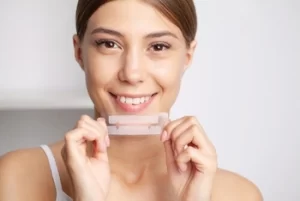 Professional treatments are also applied using custom-fitted trays made by a dentist, which reduces the risk of whitening gel contacting gum tissue. Generic over-the-counter trays may not fit as precisely, increasing that contact risk.
- Concentration of bleaching agent: Professional products use higher concentrations that are more effective but require supervision
- Pre-treatment assessment: A dentist can assess your teeth before whitening to identify any conditions, such as gum disease, cracked teeth, or existing decay, that could make whitening unsuitable or increase risk
- Monitoring: A dentist can adjust treatment if side effects arise
Over-the-counter products such as whitening strips and kits can be used safely by many people, but they are not appropriate for everyone. If your teeth are already sensitive, or if you have untreated dental problems, using these products without professional guidance may cause discomfort or make existing issues worse.
Who Is Not Suitable for Teeth Whitening?
Teeth whitening is not appropriate for all patients. A dentist can advise on individual suitability after an assessment.
Whitening is generally not recommended for people who:
- Are pregnant or breastfeeding
- Have untreated tooth decay or gum disease
- Have cracked teeth or exposed root surfaces
- Have significant sensitivity before starting treatment
- Have crowns, veneers, or tooth-coloured fillings in the teeth to be whitened; these materials do not respond to bleaching agents the way natural enamel does
What About Natural or Home Remedies?
Some people try natural alternatives including bicarbonate of soda, activated charcoal, or acidic fruit-based pastes. These approaches are generally not recommended by dentists for regular use. Bicarbonate of soda is mildly abrasive and may remove some surface staining, but it does not bleach teeth and should not be used frequently. Activated charcoal is also abrasive and carries a risk of enamel damage over time.
Acidic home remedies, including those based on lemon juice, are of particular concern. Acid directly softens and erodes enamel, which is the opposite of what whitening aims to achieve.
How to Minimise Risk From Teeth Whitening
Whether you are considering professional treatment or using an over-the-counter product, a few steps can help reduce risk:
- Have a dental check-up before starting any whitening treatment
- Use products as directed: do not leave gel on longer than recommended
- Allow time between treatment sessions for enamel to remineralise
- Use fluoride toothpaste, which can help support enamel health during and after treatment
- Avoid acidic food and drink immediately after whitening, as enamel may be temporarily more vulnerable
If you experience sensitivity that does not settle within two days, or any gum irritation that is worsening, stop using the product and consult your dentist.
A Considered Approach to Teeth Whitening
Teeth whitening can be safe and effective when it is approached with the right information and the right product for your situation. The risk of damage is not zero, but for most people with healthy teeth and gums, supervised professional whitening carries a low risk of serious side effects.
The most important step is a proper assessment before treatment begins. This allows your dentist to identify any pre-existing concerns and recommend an approach that is appropriate for your individual oral health.
If you would like to discuss whether teeth whitening may be suitable for you, we welcome you to contact Finesse Dental Stanhope Gardens. Call us on (02) 8806 0790 or book a consultation online.
Frequently Asked Questions
Does teeth whitening permanently damage enamel?
No, when used as directed under professional supervision, teeth whitening does not cause permanent structural damage to enamel. The bleaching agents work through the enamel to break down stain molecules without stripping the enamel surface. Damage can occur with overuse, incorrect application, or when products are used on unsuitable teeth, which is why a pre-treatment assessment is recommended. Individual outcomes vary.
Is tooth sensitivity after whitening normal?
Yes, temporary sensitivity is one of the most common side effects of teeth whitening. It is caused by the whitening gel affecting the dentine layer inside the tooth. For most people, it resolves within one to two days after treatment. If sensitivity is severe or persists beyond a couple of days, it is worth consulting a dentist. Pre-existing sensitivity may also be worsened by whitening treatment.
References
Healthdirect Australia. (2025). ‘Teeth whitening’. Healthdirect Australia, 13 June. Sydney, NSW: Healthdirect Australia. https://www.healthdirect.gov.au/teeth-whitening
Australian Dental Association. (n.d.). ‘Teeth Whitening’. teeth.org.au. Sydney, NSW: Australian Dental Association. https://www.teeth.org.au/teeth-whitening
Department of Health, State Government of Victoria. (2025). ‘Cosmetic dentistry and teeth whitening’. Better Health Channel, 15 December. Melbourne, VIC: Department of Health, Victoria. https://www.betterhealth.vic.gov.au/health/conditionsandtreatments/cosmetic-dentistry-and-teeth-whitening