

When a tooth becomes damaged or lost, restoring its structure and function becomes important for maintaining everyday comfort and oral health. Modern dentistry offers several treatment options that can repair or replace teeth depending on the condition of the tooth and surrounding structures.
Two treatments people commonly hear about are dental crowns and dental implants. While both aim to restore the appearance and function of teeth, they are designed for different situations. A crown is used to protect and strengthen a damaged tooth that still has a healthy root, whereas a dental implant replaces a tooth that has been lost entirely.
Understanding the dental implant vs crown comparison can help clarify why these treatments are used and how they differ in their approach to tooth restoration.
This guide explains how dental implants and crowns work, when each option may be recommended, and what factors may influence the decision between them.
Understanding Dental Crowns
Dental crowns are protective caps that cover a damaged tooth. They are used when a tooth is still present but has been weakened or structurally compromised.
A crown restores the shape, strength, and function of the tooth while preserving the remaining natural tooth root.
 Crowns are often used for:
- A damaged or decayed tooth
- A broken tooth
- Large cavities affecting decayed teeth
- Teeth that have undergone root canal treatment
- Supporting a dental bridge
- Restoring cosmetic appearance
In simple terms, crowns restore a tooth rather than replace it.
How Crown Placement Works
The process for crown placement usually involves a few steps.
Examination And Preparation
A dentist first examines the tooth and the surrounding area. If the tooth structure is suitable, the dentist reshapes the remaining tooth structure to prepare it for the crown.
Temporary Crown
During the time the permanent crown is being fabricated, a temporary crown may be fitted. This protects the tooth during the waiting period.
Dental Laboratory Fabrication
An impression of the tooth is sent to a dental laboratory, where the permanent restoration is produced. Crowns may be made from several materials, including ceramic crowns, porcelain, or metal-based materials.
Final Crown Placement
Once the crown is ready, the dentist fits and bonds the permanent crown securely onto the tooth.
The final result is a strengthened tooth that blends with nearby natural teeth.
What Are Dental Implants?
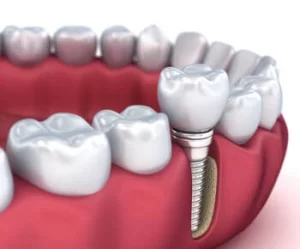
Dental implants are typically used when a tooth has been lost entirely. Instead of covering an existing tooth, an implant replaces the entire structure from root to crown.
A dental implant replaces both the visible tooth and the tooth’s root.
The implant system includes three parts:
- A titanium implant or titanium post placed in the jawbone.
- A connector piece called an abutment.
- An implant crown that acts as the visible tooth.
The artificial tooth root anchors the replacement tooth securely in the bone.
How The Dental Implant Procedure Works
The dental implant procedure involves several stages.
Initial Assessment
Your dentist evaluates the jawbone, gums, and overall oral health. Imaging helps determine whether the bone can support the implant.
Implant Surgery
During implant surgery, the titanium implant is placed into the bone. This procedure forms a stable base for the replacement tooth.
Healing Period
The implant needs time to fuse with the surrounding bone. During this healing period, the implant gradually bonds with the surrounding bone tissue.
Implant Crown Placement
Once healing is complete, the dentist attaches a crown to the implant. These dental implant crowns are custom-made to match surrounding teeth.
The result is a stable replacement tooth designed to function similarly to natural teeth.
When Dental Implants May Be Recommended
Implants are often recommended when a tooth cannot be saved.
 Situations may include:
- Tooth loss
- Severe decay affecting the root
- Trauma causing complete tooth removal
- Replacement of one or more teeth
Because dental implants provide support directly from the bone, they can function independently without relying on adjacent teeth.
How Implants Support Surrounding Teeth
When a tooth is absent, nearby teeth may gradually move into the empty space. Over time, this movement can create alignment issues and bite problems.
A dental implant helps maintain spacing by replacing the missing root and stabilising the surrounding structure.
This can help protect surrounding teeth and maintain proper bite alignment.
Dental Implants Advantages
Several advantages of dental implants make them a common choice for tooth replacement.
Preserving Bone Structure
Since the implant functions similarly to a natural tooth root, it stimulates the surrounding bone and helps limit bone loss.
Stability
Implants remain fixed in place and do not rely on neighbouring teeth.
Natural Function
An implant crown functions similarly to natural teeth for chewing and speaking.
Long-Term Solution
With proper care, implants can provide a long-term solution for replacing missing teeth.
Advantages Of Dental Crowns
Crowns also offer important benefits.
Preserving Natural Teeth
Crowns help save existing teeth rather than removing them.
Faster Treatment
Compared with implants, crown placement is usually quicker.
Strength And Protection
Crowns reinforce weakened teeth and protect them from further damage.
Cosmetic Improvement
Crowns can improve the natural appearance of teeth affected by decay or fractures.
When A Tooth Cannot Support A Crown
Dental crowns are designed to strengthen and protect a damaged tooth while preserving the natural root. However, there are situations where the remaining tooth structure may not be strong enough to support a crown. In these cases, a different restorative approach may need to be considered.
One of the most common reasons a dental crown may not be suitable is severe structural damage. If a large portion of the tooth has been lost due to decay, trauma, or previous dental procedures, there may not be enough healthy tooth material left to hold the crown securely. Because crowns rely on the remaining tooth as their foundation, insufficient structure can affect the stability and durability of the restoration.
Decay that extends below the gum line can also make crown placement more difficult. When damage reaches this level, it may be challenging to create a proper margin where the crown meets the tooth. A secure margin is important because it helps prevent bacteria and plaque from entering the space between the crown and the natural tooth.
Root damage is another factor that may limit the use of a crown. Cracks that extend into the root or significant structural compromise within the root can affect the long-term stability of the tooth. Even if the visible portion of the tooth can be restored, the underlying root may not be able to support the restoration effectively.
Teeth that have undergone multiple large restorations may also become weakened over time. Repeated fillings or previous dental treatments can gradually reduce the amount of natural tooth material available to support a crown. If the remaining structure becomes too thin or fragile, placing another restoration may not provide sufficient strength.
Before recommending treatment, a dentist usually evaluates the remaining tooth structure, root condition, and surrounding tissues. When the natural tooth can no longer provide a stable base for a crown, replacing the missing structure may be considered to restore function and stability.
Other Alternatives To Consider
When comparing dental implants vs crowns, it is useful to understand other possible options.
Dental Bridge
A dental bridge replaces a missing tooth by securing an artificial tooth to nearby teeth.
Partial Dentures
Partial dentures are removable appliances designed to replace one or several missing teeth.
Dental Veneers
Dental veneers are thin coverings placed on the front of teeth for cosmetic improvements. However, they are not used for replacing missing teeth.
Each treatment option serves different dental needs.
What Happens If A Crowned Tooth Fails
Dental crowns are designed to protect and reinforce weakened teeth, but like any dental restoration, they may eventually require attention. Over time, certain conditions can affect the crowned tooth or the restoration itself.
One possible issue involves decay developing around the margin where the crown meets the natural tooth. While the crown material itself cannot decay, the tooth underneath remains vulnerable to bacteria. If plaque accumulates along the crown edge, decay may gradually develop beneath the restoration.
In some situations, the crown may become loose or detach from the tooth. This can occur if the bonding material weakens over time or if the underlying tooth structure changes. When this happens, the crown may be reattached or replaced, depending on the condition of the tooth.
Structural changes within the natural tooth may also affect a crowned tooth. For example, the tooth beneath the crown may develop a crack or fracture that was not present when the crown was originally placed. If the underlying structure becomes unstable, additional treatment may be required.
Occasionally, the inner portion of the tooth may develop an infection after the crown has been placed. This can occur if bacteria reach the internal pulp tissue through deep decay or structural damage. In these cases, the dentist may recommend treatment to address the underlying issue while preserving as much of the tooth as possible.
The long-term outcome depends on the condition of the tooth beneath the crown. If the underlying structure remains healthy, the crown may simply be repaired or replaced. However, if the tooth becomes severely compromised, other restorative options may need to be considered to maintain function and comfort.
Regular dental examinations allow dentists to monitor crowned teeth and identify potential problems early before more complex complications develop.
Cost And Dental Insurance Considerations
The cost of treatment may influence decisions.
Procedures involving implants tend to cost more due to surgery and multiple appointments. Crown treatments are generally less complex.
Some dental insurance plans may contribute toward certain procedures, depending on policy details.
Your dentist can explain possible costs and coverage options.
Maintaining Dental Implants And Crowns
Both treatments require consistent care.
Good maintenance supports long-term success and protects overall oral health.
Recommended habits include:
- Brushing twice daily
- Flossing between teeth
- Attending regular dental visits
- Maintaining healthy gums
Good oral hygiene helps protect both implants and crowns.
What Happens If An Implant Fails
Dental implants are designed to provide long-term stability for replacement teeth, but in some situations, complications may occur that affect the implant’s performance. Understanding how these situations may develop can help patients recognise the importance of ongoing monitoring and care.
One possible issue occurs when the implant does not successfully integrate with the surrounding bone. After placement, the bone gradually bonds with the titanium implant surface in a process known as osseointegration. If this bonding process does not occur as expected, the implant may not achieve the stability needed to support the restoration.
Inflammation around the implant site can also affect its long-term health. Bacteria may accumulate around the gum tissue surrounding the implant, leading to irritation and swelling. If this inflammation progresses and affects the bone supporting the implant, the stability of the implant may gradually decrease.
Excessive pressure on the implant may also influence how it functions over time. Habits such as clenching or grinding the teeth can place additional stress on the implant restoration and surrounding structures. Managing these forces is often important for maintaining implant stability.
In some cases, the components attached to the implant may develop problems rather than the implant itself. The implant crown or connecting parts may loosen or wear over time, which can affect the fit and function of the restoration. These components can often be adjusted or replaced without removing the implant.
If complications occur, the appropriate response depends on the underlying cause and the condition of the surrounding tissues. Some situations may require only minor treatment or adjustments, while others may require removing the implant and reassessing the area before further treatment is considered.
Regular dental reviews allow dentists to evaluate implant stability, gum health, and bone support so that potential problems can be identified and addressed at an early stage.
The Role Of Healthy Teeth And Gums
For either treatment to succeed, the surrounding environment must remain healthy.
Issues such as gum disease may influence healing and the long-term stability of treatment. Addressing dental issues early helps improve treatment outcomes.
Keeping the teeth and gums healthy is important both before and after treatment.
How A Dentist Determines The Appropriate Option
Choosing between an implant and a crown depends on several factors.
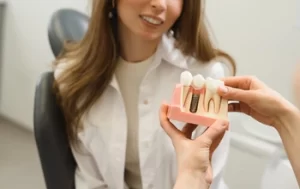 A dentist will evaluate:
- The condition of the tooth
- Bone levels in the jaw
- The health of adjacent teeth
- Overall dental health
- Patient preferences and goals
Every case is different. The appropriate treatment will depend on your specific dental condition.
Long-Term Oral Health Considerations
Whether you choose a crown or an implant, the goal is to restore function and protect oral structures.
Restoring damaged or missing teeth helps:
- Maintain chewing ability.
- Preserve facial structure.
- Protect surrounding teeth.
- Improve comfort and confidence.
Addressing dental problems early helps avoid further complications later.
Final Thoughts
Understanding the differences between a dental implant vs crown helps clarify which treatment may be appropriate for your situation.
Crowns restore damaged teeth by covering and strengthening the remaining structure. Dental implants replace a missing tooth entirely, including the root.
Both treatments play important roles in restorative dentistry and contribute to long-term dental health. The appropriate option depends on the condition of the tooth, the surrounding bone, and overall oral health.
If you are considering treatment for a damaged or missing tooth and would like personalised guidance, you can book a consultation with us at Finesse Dental or call (02) 8806 0790 to discuss your options and learn which approach may suit your dental health needs.
Note: Any surgical or invasive procedure carries risks. Before proceeding, you should seek a second opinion from an appropriately qualified health practitioner.
Resources
“Archibald, J.; Hersh, E.; Healthline Editorial Team (2026). ‘Gingivitis (Gum Disease) Overview’. Healthline, 28 January. San Francisco, CA: Healthline Media. https://www.healthline.com/health/gingivitis”
“Colgate (2023). ‘What Is Good Oral Hygiene?’. Colgate Oral Care Center, 9 January. New York, NY: Colgate-Palmolive Company. https://www.colgate.com/en-us/oral-health/adult-oral-care/what-is-good-oral-hygiene”
“Cleveland Clinic (2023). ‘Dental Crowns’. Cleveland Clinic, 14 April. Cleveland, OH: Cleveland Clinic. https://my.clevelandclinic.org/health/treatments/10923-dental-crowns”
“Mayo Clinic Staff (2024). ‘Dental Implant Surgery’. Mayo Clinic, 23 October. Rochester, MN: Mayo Foundation for Medical Education and Research. https://www.mayoclinic.org/tests-procedures/dental-implant-surgery/about/pac-20384622”
“Healthdirect Australia (2025). ‘Dental Bridge’. Healthdirect Australia, February. Sydney, NSW: Healthdirect Australia Ltd. https://www.healthdirect.gov.au/dental-bridge”